Locations
AlUla
Sandstone monuments rising from an ancient oasis valley
AlUla is a valley of sandstone outcrops, ancient tombs, and a living palm oasis in northwest Saudi Arabia — a landscape that has drawn traders, travelers, and now productions, for thousands of years.
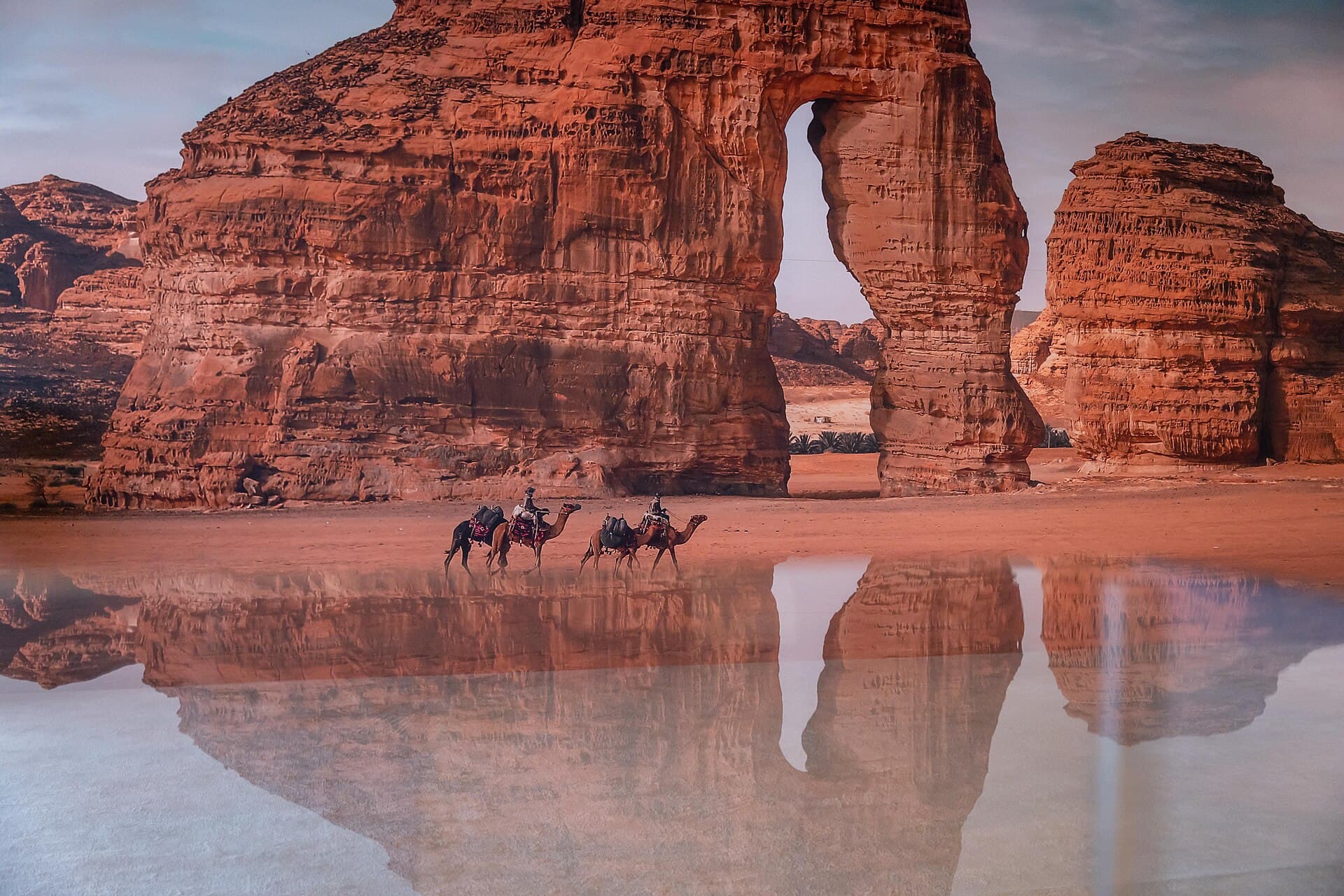
Elephant Rock (Jabal AlFil)
A freestanding sandstone formation eroded into the unmistakable shape of an elephant, rising alone from the desert floor — one of AlUla’s most photographed natural landmarks.
Hegra
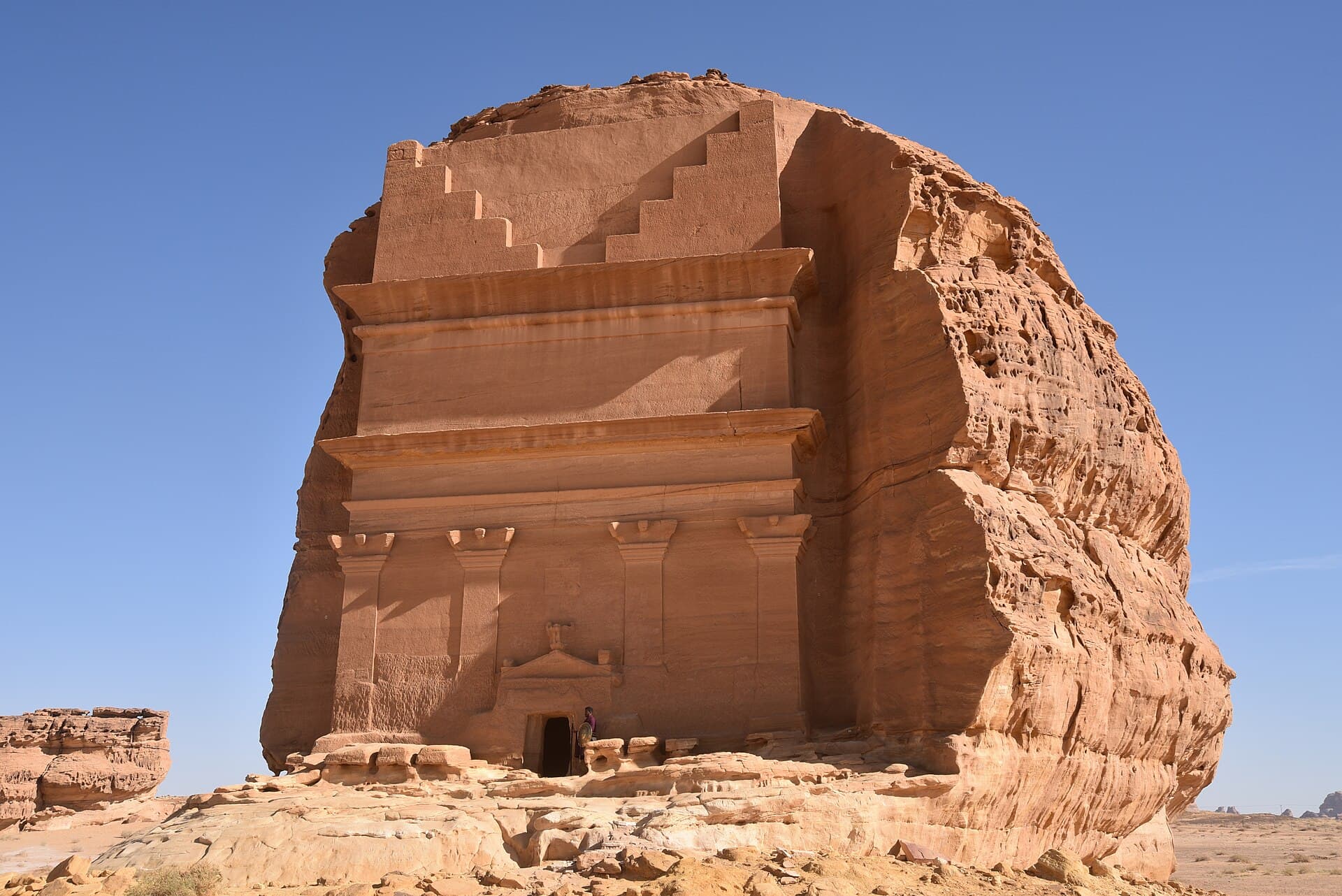
Saudi Arabia’s first UNESCO World Heritage Site and the Nabataeans’ southern capital after Petra — monumental tombs carved directly into standalone sandstone outcrops across an open desert plain.
AlUla Old Town
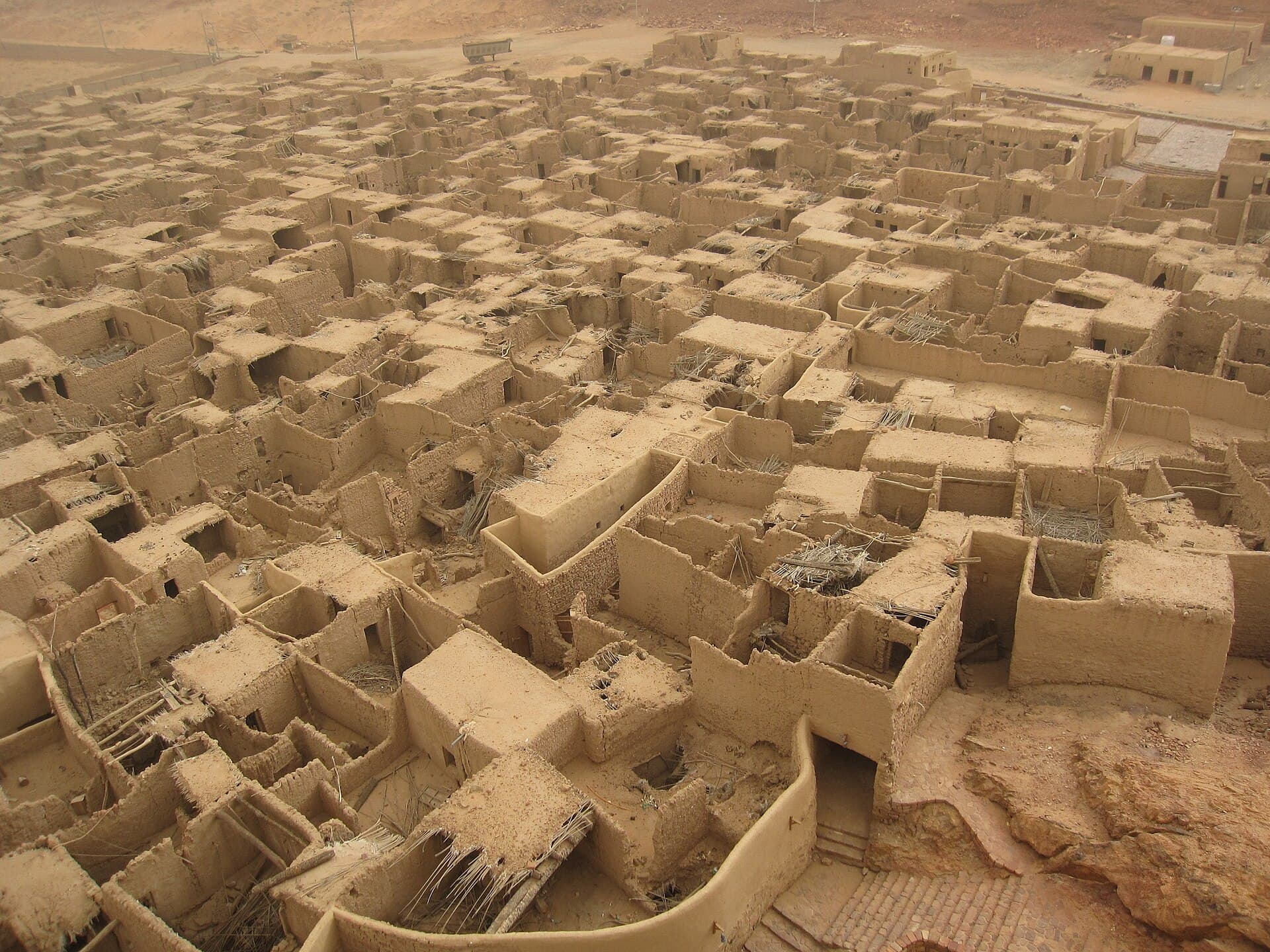
A dense, mudbrick settlement of narrow lanes and multi-storey houses, inhabited for centuries before the valley’s residents moved to the modern town — now preserved, with restored stays such as Dar Tantora within its walls.
The oasis valley
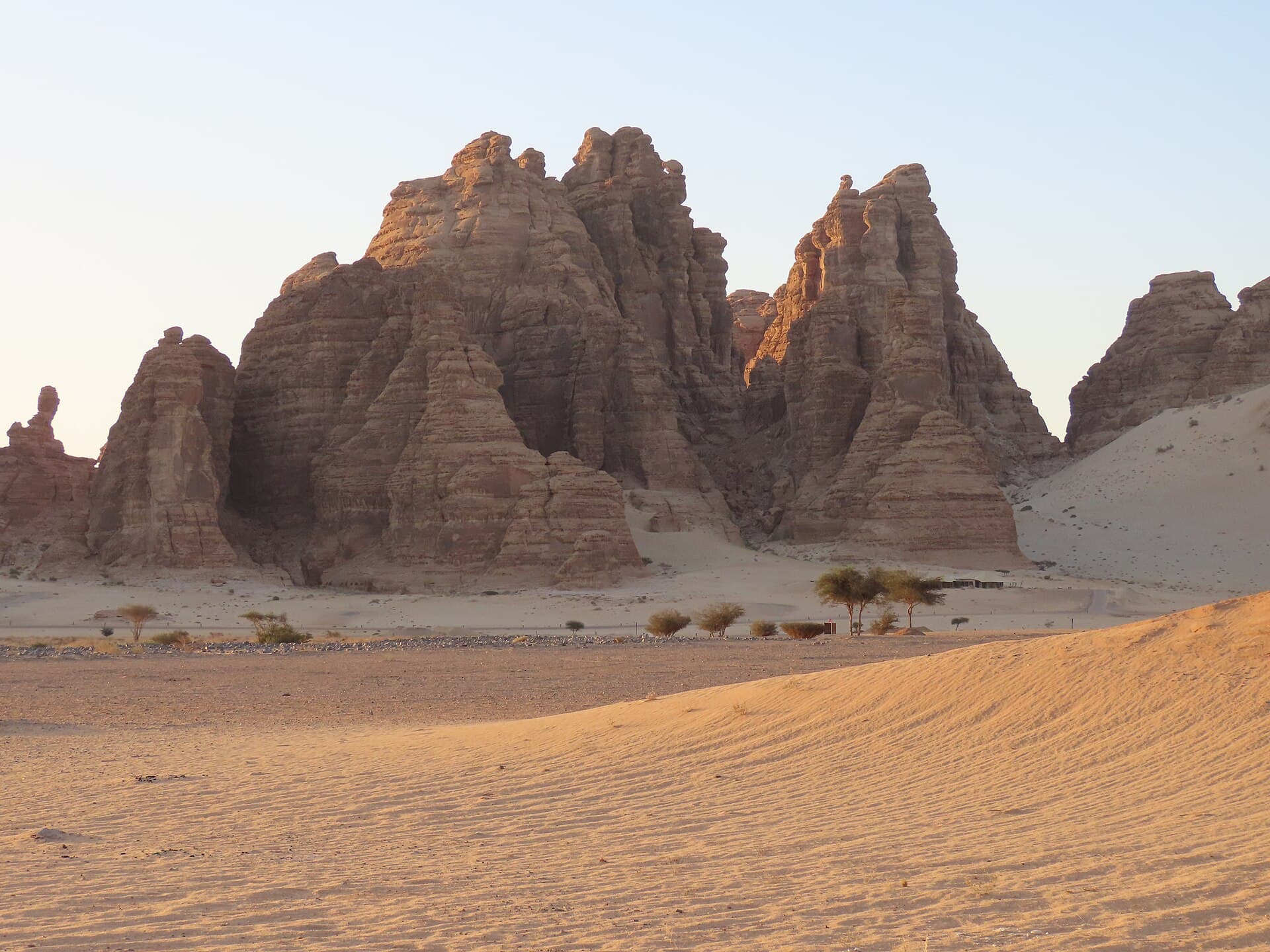
A long, green corridor of date palms and cultivated terraces running through the sandstone, fed by wadis such as Wadi Ashar — the agricultural counterpoint to AlUla’s bare rock formations.
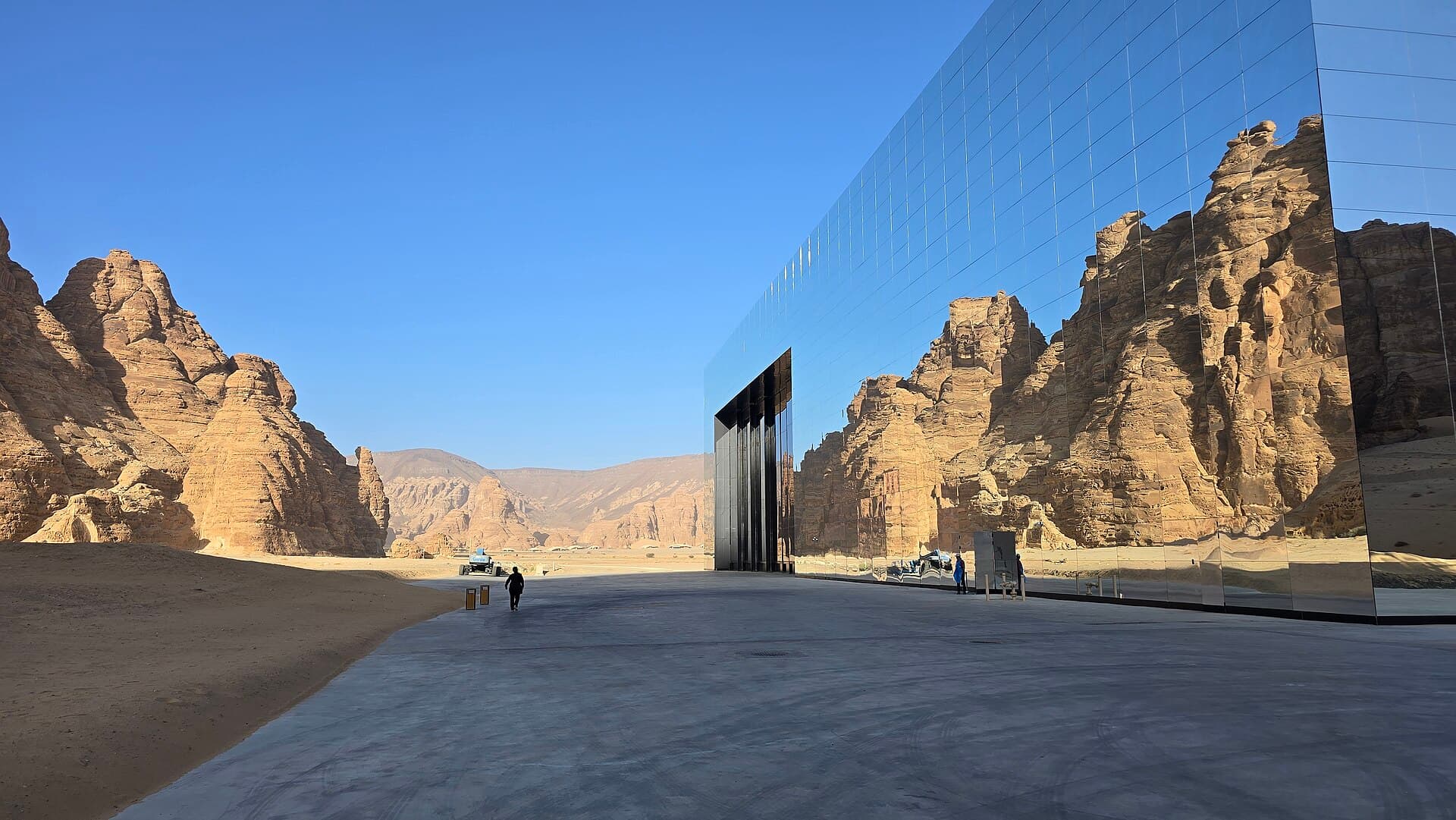
Maraya
A mirrored concert hall set against the surrounding cliffs, its reflective surface dissolving the building into the landscape around it — a contemporary landmark inside an ancient valley.
Production potential
AlUla’s range — bare sandstone monuments, a mudbrick old town, a green oasis floor, and a contemporary mirrored structure — supports everything from desert-set film and commercial work to documentary and heritage photography, often within a few minutes’ drive of each location.
Cultural context
AlUla carries layered history, from Dadanite and Nabataean settlement through to the oasis town abandoned only in recent decades — a valley where ancient monuments, agricultural heritage, and ongoing conservation work meet.